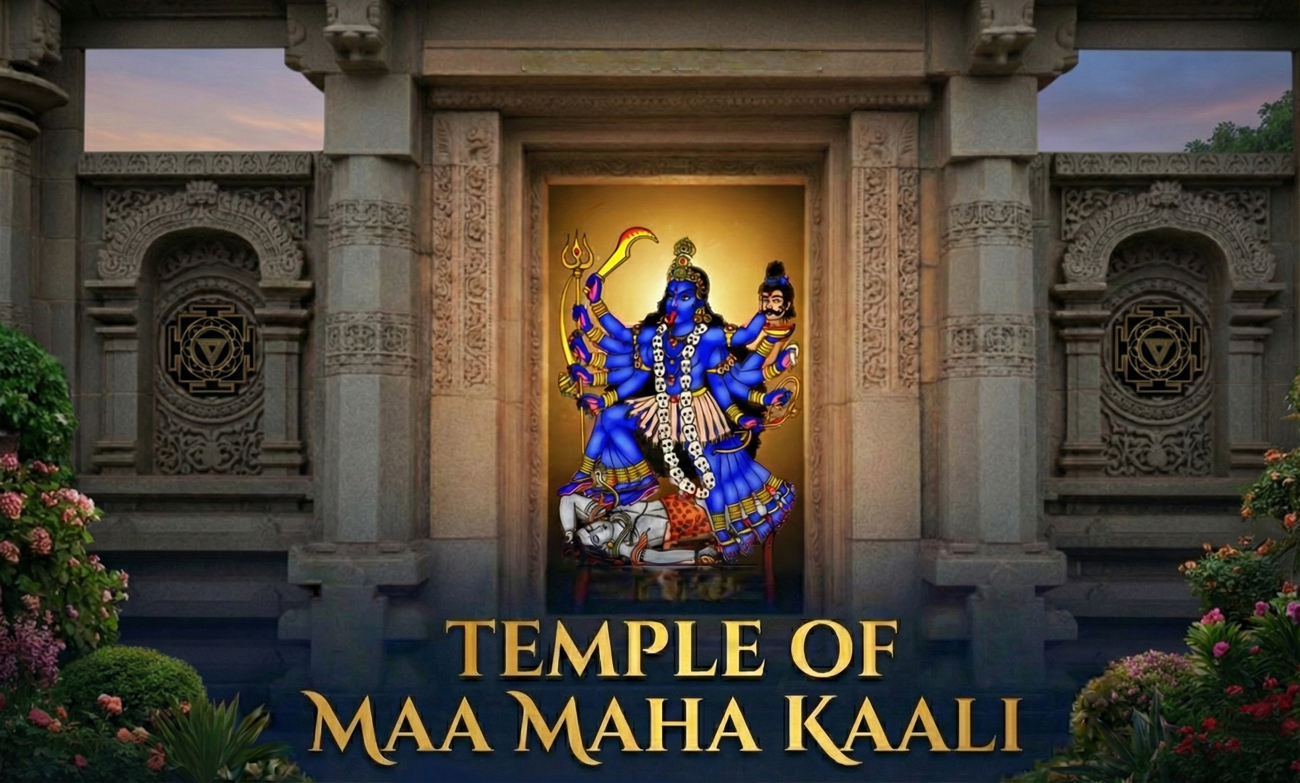
To seek Divine Blessings From The Divine Mother
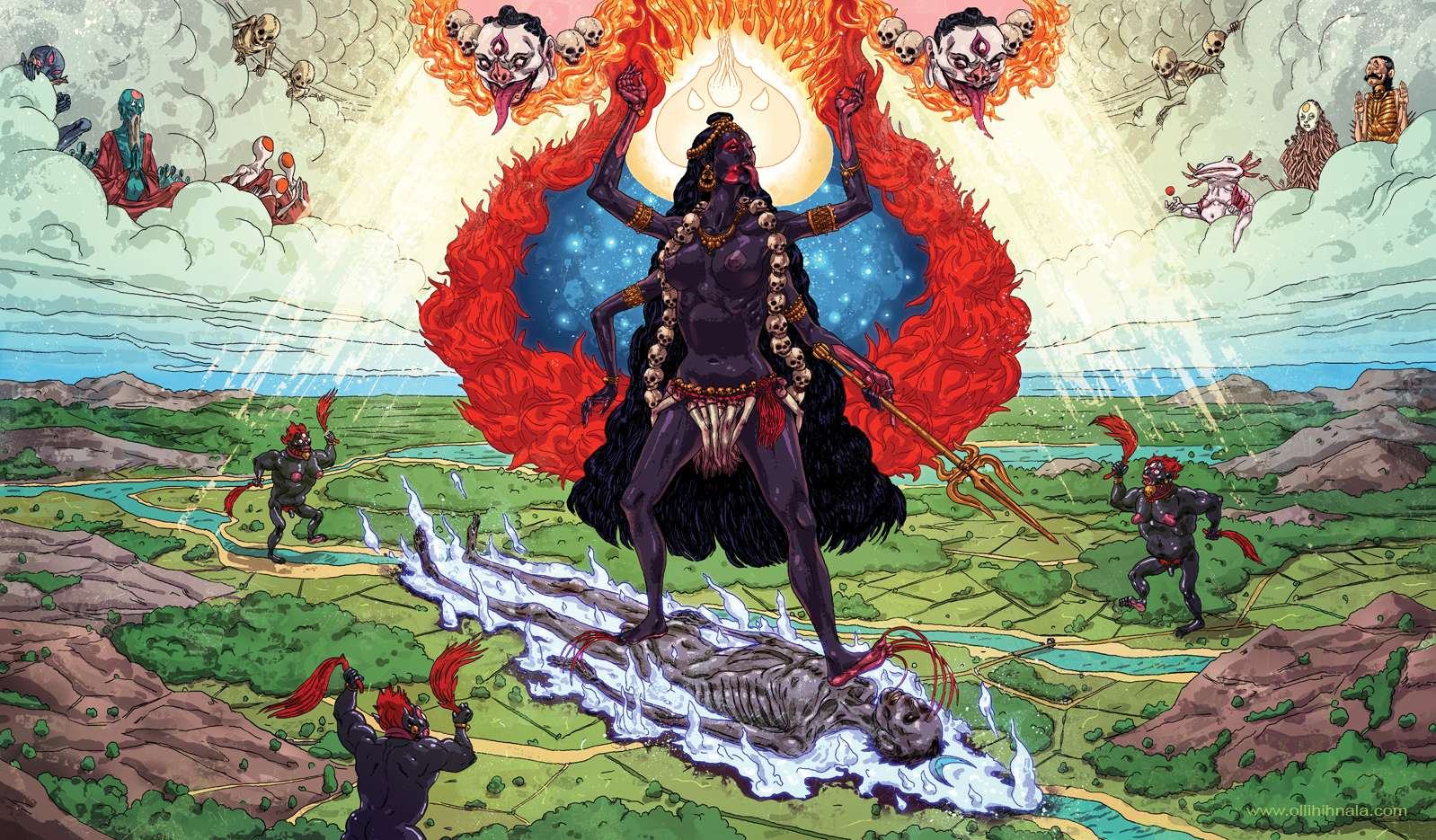
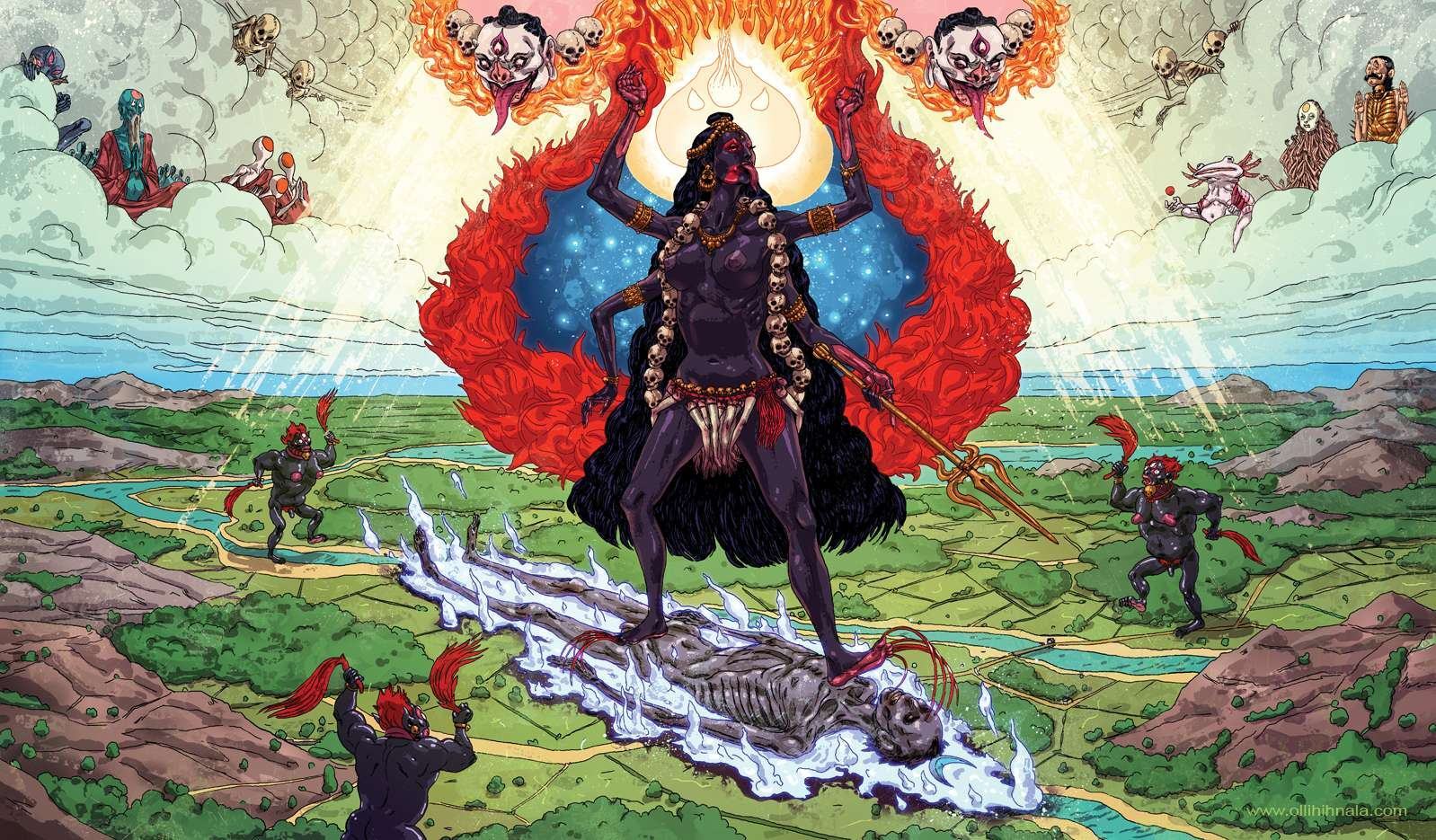
“Om. i revere Maa Maha Kaali, Who Holds In Maa’s Divine Hands The Sword, Discus, Mace, Arrow, Bow, Iron Club, Spear, Sling, human head, And Conch; Who Is Three-Eyed, Adorned On All Maa’s Divine Limbs, And Sparkling Like A Sapphire; Who Has Ten Faces And Ten Feet; And Whom lord brahma Extolled while lord vishnu was in deep sleep in yognidra; Whose Divine Blessings Enabled The “Slaying” Of madhu and kaitabha.”
– From The Meditation On Maa Maha Kaali, First Carita, Of “The Devi Mahatmya”
The Divine Mother Maa Maha Kaali Has Been Recognised by sages of ages As Divine Forms Of Maa Tara, Who Provides moksha to human beings irrespective of their karma. Maa Aadi Tara Is Present everywhere And Also Known As Maa BrahmaMayi Tara. If one chants “Maa Tarar Jai” With true conviction all problems dissolve. As A Mother Cannot But Answer sincere child’s cries.
Maa Maha Kaali Is Also worshipped As:-
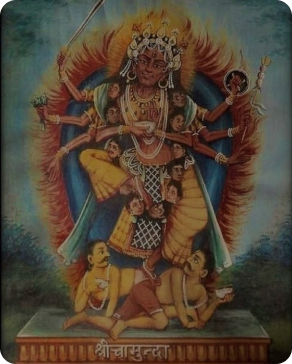
Maa Chamunda
Maa BhadraKali
Maa Kamakhya
Maa Parvati
Maa SkandaMata
Maa ShailaPutri
Maa Durga
Maa Prakruti
Mata KamEswari Tara
Maa VajraTara
Maa Ekajata
Maa Mahogra
Maa UgraTara
Maa Neela SaraSwati
Maa Adi ParaShakti
Maa KalaRatri
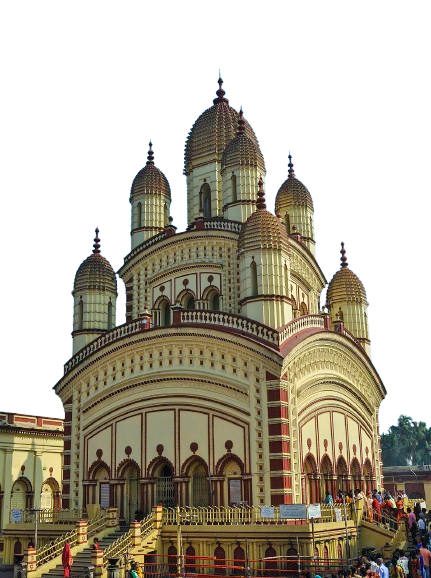
Join as a devotee / volunteer and engage your skills and time bestowed upon you By Maa Maha Kaali, for devotion and worship and by performing seva – and seek Blessings From The Divine Mother Maa Maha Kaali.
It is an opportunity to serve, and get to learn authentic wisdom and lessons from The Divine Temple.
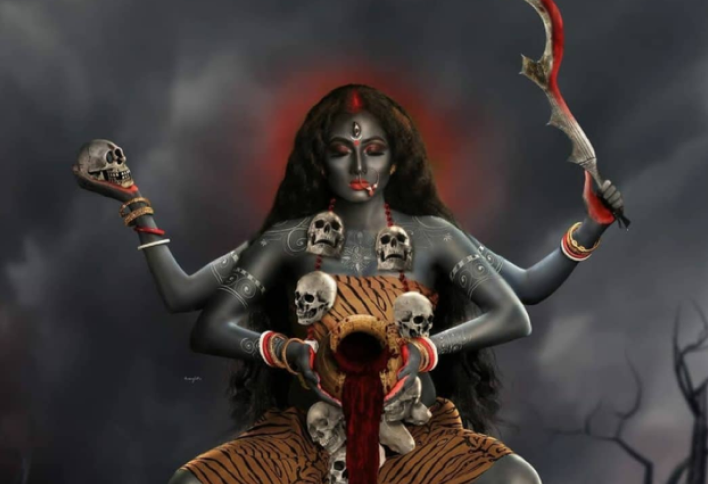
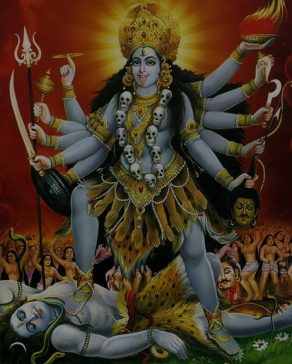
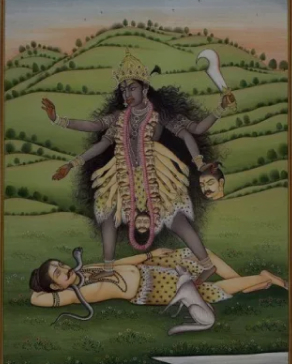
Dakshina Kali is the most widely worshipped form, depicted standing on Lord Shiva.
Dakshina Kali is the most widely worshipped form, depicted standing on Lord Shiva.
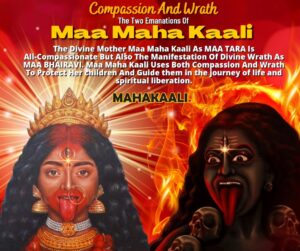
Dakshina Kali is the most widely worshipped form, depicted standing on Lord Shiva.
Please note: Our Online Temple is not affiliated with any physical Temple listed. We encourage visitors to verify all addresses, locations, and details directly with the Temple before visiting.
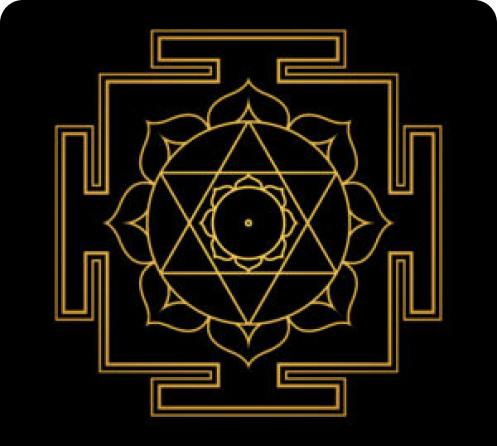
The Divine Mother Maa Kamala Blesses devotees With spiritual liberation. Maa Kamala Guides sincere devotees To work for the wellbeing of others and pursue the wealth of righteousness, encompassing devotion, kindness, compassion, truthfulness, and virtues significant on the path Towards realization of the true self.
The Divine Depiction Of Maa Kamala
The Divine Mother Maa Kamala Is Depicted With A Golden Complexion, Clothed In Red, And Richly Adorned With Gold Jewelry. Depicted With Four Divine Hands, Maa Kamala Holds Lotus Flowers In Two Divine Hands And Gestures The Varada Mudra (Granting Blessings) And The Abhaya Mudra (Granting Protection And Removing Fear) With The Other Two Divine Hands.
Maa Kamala Is Also Depicted Seated On A Lotus In the middle of an ocean, With elephants On Either Side Pouring Water Upon Maa Kamala In a ritual called abhishekam.
Abhishekam is a ritual Bathing Of An Idol Or Image For The worship Of The Divine Mother with water, milk, honey, yogurt, ghee, and other sacred offerings. The ritual is accompanied by chanting and prayer To seek Blessings Of The Divine Mother, express devotion, and purify the mind.
The Symbolism Of The Lotus
The Divine Mother Maa Kamala Is Depicted Seated On A Lotus Seat, Symbolizing purity. A lotus blooms in mud yet remains untouched. In the same way, The Lotus Upon Which Maa Kamala Is Depicted Seated Teaches sincere devotees To remain inwardly pure and unattached.
Often, we believe obstacles arise externally. Yet it is the ego-driven mind that derails one from the path of truth. By The Blessings Of The Divine Mother Maa Kamala, deserving devotees are enabled to subdue the ego-driven mind and attain inner purity necessary for spiritual progress.
The Worship Of Maa Kamala
Worshipped across cultures, particularly in eastern india such as bengal, odisha, and assam, Maa Kamala Holds A Special Place In the hearts of devotees.
The worship Of Maa Kamala Guides sincere devotees To transcend attachment to material wealth and recognize the significance of spiritual abundance and compassion.
Rituals And Practices Of worship
The worship Of Maa Kamala involves rituals to seek Blessings. The worship begins with purification of the space and worshippers.
Offerings include:
• lotus flowers
• fruits
• sweets
• sacred items
Devotees light lamps symbolizing illumination of knowledge and removal of ignorance. The chanting of mantras For The worship Of Maa Kamala Is An Essential Part Of The Ritual.
Significance Of Festivals Dedicated To The worship Of Maa Kamala
Among festivals, Maa Kamala Is Venerated during diwali. During diwali, homes and temples are illuminated To welcome The Divine Mother.
In eastern india, the worship Of Maa Kamala is also connected To The “Maa Kaali Puja.”
Conclusion
The Divine Mother Maa Kamala Is The Bestower Of The Wealth Of Knowledge And Wisdom For Realization Of The True Self, Leading To spiritual liberation.
By The Blessings Of Maa Kamala, devotees are enabled to subdue the ego and detach from worldly pursuits. Blessed With inner balance, devotees Are Guided To cultivate purity, peace, and compassion, And Are Empowered To contribute To the spiritual wellbeing of all.
The Divine Mother Maa DhumaVati: The Divine Blessing In Disguise
The Divine Mother Maa Maha Kaali As Maa DhumaVati Is Revered As The Embodiment Of Divine Blessings In Disguise. The Dark, Shadowy, And Smoky Depiction Of Maa DhumaVati Symbolizes the challenging aspects of life. The Divine Mother Is Ever-Present In all auspicious moments And In situations considered inauspicious due to lack of wisdom. Maa DhumaVati Guides deserving devotees To realize that adversity and hardship are transformative experiences. By The Blessings Of Maa DhumaVati, deserving devotees are enabled To recognize The Presence Of The Divine Mother In both light and darkness.
Maa DhumaVati Symbolizes disappointment, loss, sorrow, humiliation, defeat, and loneliness. These experiences overwhelm ordinary minds, yet for sincere seekers they become opportunities to connect with reality beyond worldly desire. Recognizing The Presence Of The Great Cosmic Wisdom Expression Of The Divine Mother Within these experiences Is A Great Blessing Of Maa DhumaVati Upon devotees. Maa DhumaVati Bestows Virtues Such As patience, perseverance, forgiveness, and detachment Upon courageous devotees. By The Blessings Of Maa DhumaVati, devotees transform into guides for humanity.
Maa DhumaVati Is The Great Cosmic Wisdom Expression Guiding deserving devotees To remain aware Of Divine Impermanence
Nothing in this universe is permanent; names and forms constantly change. Material existence is transient. Maa DhumaVati Guides deserving devotees Towards awareness of impermanence.
The Blessings Of Maa DhumaVati Enable devotees To:
• transcend limited perception
• embrace deeper truth
• renounce egoic pursuits
• navigate life with resilience
The Symbolism Of The Divine Depiction Of Maa DhumaVati Guides deserving devotees To cultivate detachment from egoic pursuits. Maa DhumaVati Blesses deserving devotees To attain spiritual liberation, As The Divine Mother Chooses.
Myths About The Emergence Of Maa DhumaVati
Two Myths Are Associated With The Emergence Of Maa DhumaVati.
First myth
Maa DhumaVati Emerged When Maa Sati Self-Immolated In The Divine Mother's father’s sacrificial fire. Maa DhumaVati Emerged From The Smoke That Rose From Maa Sati’s Divine Body, Embodying The Energy Of Maa Sati At The Time Of Her Self-Immolation. Maa DhumaVati Is Thus Associated With smoke And Mourning.
Second Myth
Maa Sati, Residing With lord shiva In the himalayas, Grew Hungry And Requested food. When refused, Maa Sati Swallowed him. lord shiva Later Convinced The Divine Mother To Release him, And The Divine Mother Manifested In The Widow Form As Maa DhumaVati.
In this Myth, Maa DhumaVati Symbolizes both assertiveness and solitude. Though associated with widowhood, Maa DhumaVati Also Signifies independence and detachment Leading To spiritual liberation.
Temple For The Worship Of Maa DhumaVati In varanasi
Temples dedicated To The worship Of Maa DhumaVati are rare. The most well-known Is The “Maa DhumaVati Temple” in varanasi.
In This Temple, The Idol Of Maa DhumaVati Is Depicted In A Widow Form, Riding A Chariot And Holding A Winnowing Basket, A Broom, And A Pot, While Making The Abhaya Mudra.
Devotees offer smoke and incense, worshipping Maa DhumaVati In The Form Of Smoke, All-Pervasive And Unbound.
The Temple Is Believed To Be A “Shakti Pitha.” The Blessings Of Maa DhumaVati Instill solitude and introspection In sincere devotees.
Local devotees Revered Maa DhumaVati As The Benevolent And Approachable Divine Mother. The Divine Mother Is Not Seen Only As The Divine Mother Of inauspiciousness but As The Protective Guardian Of the village.
Meditation On Maa DhumaVati
The worship Of Maa DhumaVati Enables letting go of thoughts And Entering Silence Of The Unknown. To meditate On Maa DhumaVati, one shifts attention inward And Recognizes The OmniPresence Of The Divine Mother.
By The Blessings Of Maa DhumaVati, deserving devotees Attain Realization Of The True Self. Maa DhumaVati Blesses worthy devotees With The Ability To perceive sorrow as Divine Blessings That Teach the limitations of body and mind.
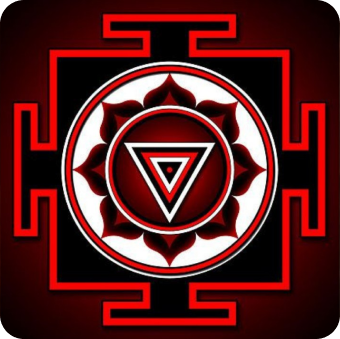
The Sacred Yantra For The Meditation And Worship Of Maa DhumaVati
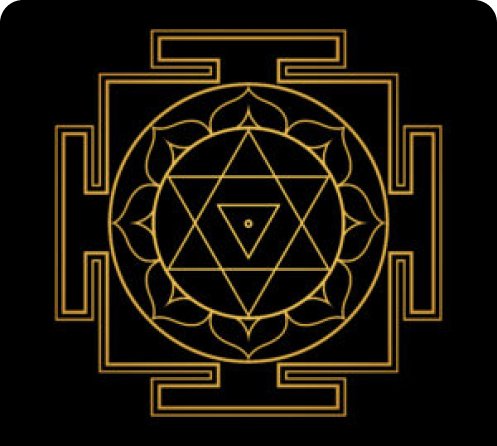
The Sacred Yantra For The worship Of Maa DhumaVati Symbolizes The Blessings Of Maa DhumaVati.
The Yantra Is Composed Of A Triangle With A Central Bindu, Within A Six-Sided Star, Surrounded By A Circle And An Eight-Petaled Lotus Within A Square Structure.
Concentration Upon The Sacred Yantra Guides the mind Towards single-pointed devotion To The Divine Mother Maa DhumaVati.
Conclusion
Maa DhumaVati Reveals the temporary and bewildering nature of egoic existence, Guiding devotees To transcend limitation. By The Blessings Of Maa DhumaVati, deserving devotees Attain virtues such as patience and detachment.
Symbolizing the smoky and shadowy aspects of the temporary world, Maa DhumaVati Liberates devotees from superficial attachment.
The sincere worship Of Maa DhumaVati Enables devotees To honor adversity As Divine Blessings. By The Blessings Of Maa DhumaVati, devotees Attain profound Knowledge Of The Ultimate Reality And Realization Of The True Self, Leading To spiritual liberation.
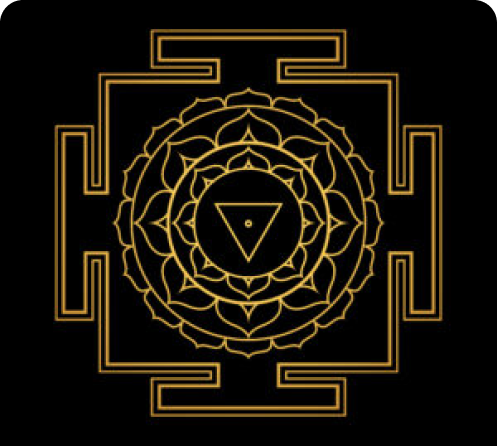
The Divine Mother As Maa Matangi Embodies The Teachings Of the guru and the continuity of spiritual instruction in the world. Maa Matangi Is worshipped with leftover food (uchchhishta), Symbolizing freedom from rigid ideas of purity and impurity. Devotees learn that impurity arises not from ritual failure but from clinging to these constructs, and that sincerity in worship is more important than ritual adherence. By transcending egoic pride tied to purity, one can recognize The Presence Of The Divine Mother In all, Even In what is deemed impure. Maa Matangi Liberates consciousness from false notions and Blesses deserving devotees With the ability To teach and guide others on the path of knowledge. As A Maa MahaVidya Form Of Maa Maha Kaali, Maa Matangi Is Depicted With chandalas, Symbolizing That The Divine Self Shines Forth Equally From the high-born and the lower caste.
The Divine Mother As Maa Matangi Embodies The Teachings Of the guru and the continuity of spiritual instruction in the world.
Maa Matangi Is worshipped with the offering of uchchhishta instead of pure food. This Guides sincere devotees Towards freedom from ordinary ideas of right and wrong, pure and impure. The sincere worship Of Maa Matangi Enables deserving devotees to realize that impurity is caused not by ritual failure but by lack of awareness of this wisdom. Maa Matangi Liberates consciousness from false notions and Blesses deserving devotees With the ability To teach and guide others on the path of knowledge.
Maa Matangi, As A Maa MahaVidya Form Of Maa Maha Kaali, Is Depicted Keeping chandalas as company, Symbolizing That The Divine Self Shines Forth Equally From the high-born and the lower caste.
The Depiction Of Maa Matangi
Maa Matangi Is Depicted Seated On An Altar With A Greenish Complexion, A Garland Of kadamba Flowers Around The Divine Neck, Long Hair, A Moon Symbol On The Divine Forehead, Holding A Skull, A Sword, A Goad, A Club, And A Veena In The Divine Hands, And Is accompanied by two parrots.
Maa Matangi Symbolizes the power of spoken words and the ability to listen and transform speech into knowledge. Maa Matangi Is Also The Divine Mother Of art, music, and dance. Maa Matangi Embodies the supreme word which carries the knowledge of sacred texts and sacred mantras.
Origin myth Associated With Maa Matangi
As per myth found in the “shakti sangama tantra,” Maa Matangi Appears As “Maa Uchchhishta Matangi.” Once lord vishnu And maa maha lakshmi visited lord shiva And Maa Parvati. As they shared food, some fell to the ground. From these leftovers, A Beautiful Divine Form Appeared And Asked For more. lord vishnu, maa maha lakshmi, lord shiva And Maa Parvati Gave The Leftovers, Making them sacred. From that moment, The Beautiful Divine Form Became Revered As Maa Uchchhishta Matangi.
This myth signifies Maa Matangi’s Association With what is considered impure from an ordinary perspective. Leftovers are considered unclean, Yet Maa Matangi Asks For them, Emphasizing That The Divine Mother Is Beyond society-made constructs of pure and impure.
Maa Matangi Is Also Associated With forest culture and tribal communities, Symbolizing transcendence of social norms.
The Worship Of Maa Matangi
The tantrasara text explains that by meditating On Maa Matangi Or reciting the mantra For The worship Of Maa Matangi, a devotee may seek The Blessings Of Maa Matangi.
Before performing rituals, devotees may offer:
• mallika flowers
• bel flowers
• palas flowers
• certain plants
• neem twigs and rice
• neem oil and salt
• salt alone
• turmeric powder
• fragrant items such as sandalwood and camphor
• salt mixed with honey
Conclusion
The sincere worship Of Maa Matangi Reveals To deserving devotees that impurity stems from lack of spiritual wisdom, not ritual failure. Depicted As Associated With untouchables and tribal cultures, Maa Matangi Symbolizes transcendence of social constructs, Emphasizing That The Divine Mother Is Beyond distinctions. As The Divine Mother Of speech, art, music, and sacred knowledge, Maa Matangi Embodies the supreme word and the transformative power of Divine Wisdom.
The Origin Myth Associated With Maa Matangi Signifies Her Association With what is considered impure, Symbolizing dissolution of societal boundaries.
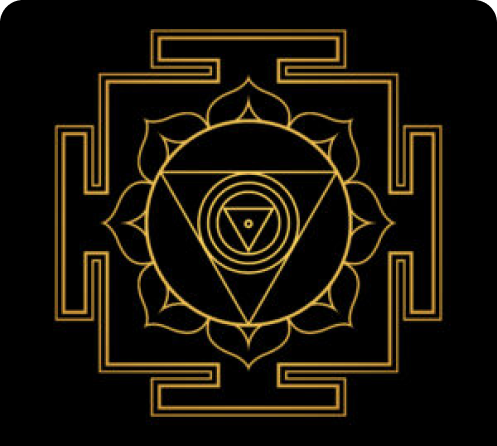
Maa ChinnaMasta, With The Depiction Of The Divine Mother's Severed Head Facing Towards The Empty Space Above The Divine Body, Holds The Divine Mother's Severed Head In The Divine Hand Facing The Divine Mother's Own Direction. This Symbolizes The Divine Mother's Guidance To sincere devotees To look within and seek realization of the true self in order To attain spiritual liberation. It Teaches that the mind must turn inward, into the abode of pure consciousness, to realize the true self, “shiva”.
Maa ChinnaMasta Jayanti is an auspicious festival celebrated annually on shukla paksha chaturdashi of the baisakh month as per the lunar calendar by the ardent devotees and worshippers Of Maa ChinnaMasta, The Divine Mother Of Self-Sacrifice And Altruism, The Life-Giver And The Life-Taker.
Being Without Head Is A Subtle Metaphor Referring To the transcendence of identification with bodily consciousness. It Also Refers To overcoming attachment to thoughts and desires. Maa ChinnaMasta’s Detached Head Also Symbolizes the nature of pure consciousness, detached from body and mind, aligned only with the soul.
Origin Stories And Legends Of Maa ChinnaMasta
Maa ChinnaMasta Appears In Two Distinct Sets Of Legends:
• Maa Das MahaVidya.
• Genesis Of Maa ChinnaMasta As An Individual Form Of The Divine Mother.
Maa ChinnaMasta As Maa MahaVidya
In chapter 8 of the shakta mahabhagavata purana, lord shiva extolled The Glory Of The Maa Das MahaVidya To sage narada. He recounted The Legend Of The Emergence Of The Maa Das MahaVidya, The Ten Great Cosmic Wisdom Expressions Of The Divine Mother Of the universe.
According To The Legend, Maa Sati, A Manifestation Of The Divine Mother In The Form Of The Daughter of daksha and The First Consort of lord shiva, Became Enraged when The Divine Mother's father did not invite The Divine Mother and lord shiva to his yajna ceremony.
When lord shiva refused to attend, Maa Sati Decided To Remind him that The Divine Mother Was The Emanation Of The Divine Mother. With Eyes Blazing, Maa Sati Roared. lord shiva attempted to leave. To Restrain him, The Divine Mother Appeared In A Transcendent Form In Each Of The Ten Directions. In whichever direction lord shiva moved, Maa Sati Appeared In A Maa MahaVidya Form.
To his right (in the east), Maa Sati Appeared In The Fearsome Form Of Maa ChinnaMasta.
Maa ChinnaMasta As An Individual Form Of The Divine Mother
In the prana toshini tantra, there is a story Of The Origin Of Maa ChinnaMasta. One day Maa Parvati, The Reincarnation Of Maa Sati, Went To Bathe In the mandakini river With The Divine Mother's attendants dakini and varnini.
The Divine Mother's attendants prayed, “O Mother Of the universe, Give us food.” Upon Hearing their prayer, The Merciful Divine Mother Smiled And Severed The Divine Head With The Divine Fingernails. The Divine Head Fell Into The Divine Hand. Three Bloodstreams Emerged From The Divine Throat. The Left And Right Streams Flowed Into the mouths of The Divine Mother's attendants, And The Central Stream Flowed Into The Divine Mother's Own Mouth.
Maa Parvati Was Thereafter Venerated As Maa ChinnaMasta.
In another narration, The Divine Mother Appeared Fierce And From The Divine Body Emerged Two Shaktis who became dakini and varnini. When they requested food, The Smiling Divine Mother Severed The Divine Head And Fed Them With The Blood From The Divine Body. Afterward, The Divine Mother Replaced The Divine Mother's Head And Returned To The Divine Mother's Original Form. This occurred on the day of viraratri. Thus, Maa ChinnaMasta Emerged On viraratri.
Temples Commemorating Maa ChinnaMasta Jayanti
“Maa ChinnaMasta Jayanti” is observed annually on shukla paksha chaturdashi of the baisakhi month.
On this day, devotees decorate temples, chant mantras, and recite praises Of Maa ChinnaMasta.
Some temples dedicated To The worship Of Maa ChinnaMasta include:
• “Maa Chinnamasta Mandir” near “Maa Kamakhya Devi Mandir,” assam, india
• “Maa ChinnaMasta Mandir” in bishnupur, india
• “Maa ChinnaMasta Temple” near sati ghat, india
• “Maa Chinnamasta Mandir” near the damodar river, india
• “Maa Chinnamasta Mandir” in rajrappa, india
• A Temple For The worship Of Maa Chintpurni in himachala pradesh
• A Shrine Dedicated To Maa ChinnaMasta in ramnagar near varanasi
• A Shrine in changunarayan, nepal
• A Temple in patan, nepal
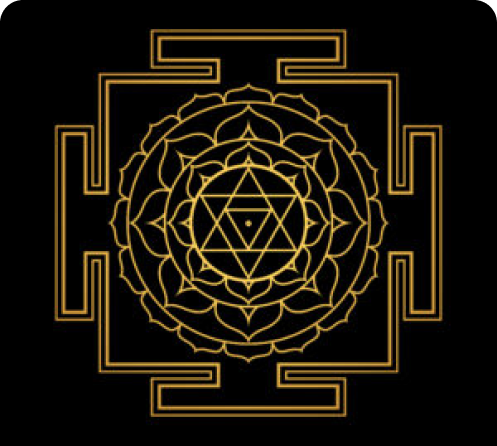
The Divine Mother Mata BagalaMukhi Protects devotees By Immobilising the speech, expression, and movement of all with ill intentions.
Mata BagalaMukhi, Also Revered As “Mata Pitambara,” Is A Maa MahaVidya Form Of Maa Maha Kaali. Mata BagalaMukhi Is worshipped As The Divine Mother Who Stuns our ego into submission, Enabling us to connect with our soul. Mata BagalaMukhi Blesses sincere and deserving devotees With The Guidance To overcome negative thoughts and emotions born of the ego. Mata BagalaMukhi Rids the mind of confusion, Enabling sincere devotees To attain higher states of consciousness towards spiritual liberation.
The Depiction Of Mata BagalaMukhi
Mata BagalaMukhi Is Depicted With A Striking And Fearsome Appearance, With A Golden Complexion, Clad In Yellow Garments, Seated On A Throne Or A Lotus. In The Divine Mother's Depiction, Mata BagalaMukhi Holds A Club In One Divine Hand, Which The Divine Mother Uses To Immobilise the speech and expression of those with ill intentions, While The Other Divine Hand Pulls the tongue of a demon, Symbolizing control over speech.
The Divine Mother As Mata BagalaMukhi Is The Destroyer Of external and internal forces that obstruct the spiritual growth Of The Divine Mother's sincere devotees.
Myths About The Emergence Of Mata BagalaMukhi
There are two well-known myths About The Emergence Of Mata BagalaMukhi:
• The myth about the cosmic storm
• The myth about the demon madan
The myth about the cosmic storm
As per myth, during the krta yuga, a terrible cosmic storm threatened the universe. lord vishnu went to a sacred pond called haridra and performed austerities. He prayed To The Divine Mother Maa Tripura Sundari (Maa Shodashi), Who Appeared And Filled the world With The Divine Light. Maa Tripura Sundari (Maa Shodashi) Then Emanated As Mata BagalaMukhi. Mata BagalaMukhi Appeared In the turmeric pond and Calmed the storm. As Mata BagalaMukhi Appeared In a turmeric pond, The Divine Mother Is Also Revered As Mata Pitambara (The Divine Mother Who Wears Yellow).
The Depiction Of Mata BagalaMukhi’s Stern Stance Symbolizes The Divine Mother’s Boldness With Which The Divine Mother Stuns opposition to truth and Removes obstacles from the path of light.
The myth about the demon madan
As per another myth, a demon named madan performed austerities and was granted the power called “vak siddhi.” He abused this power. The gods prayed To Mata BagalaMukhi For Help. The Divine Mother Mata BagalaMukhi Stopped the demon By Grabbing his tongue and Silencing him. Thus, Mata BagalaMukhi Is Depicted Holding the demon madan’s tongue.
These myths signify The Powers Of The Divine Mother Mata BagalaMukhi. The first myth signifies Divine Power To Restore balance. The second myth emphasizes Divine Power To Silence ill intentions.
The Worship Of Mata BagalaMukhi
The Depiction Of Mata BagalaMukhi Silencing the demon Guides And Enables sincere devotees To still the mind and speech.
Through sincere worship Of Mata BagalaMukhi, devotees may learn to control their chitta vrittis to attain peace and focus, With The Blessings Of The Divine Mother, As The Divine Mother Chooses To Bless.
The worship Of Mata BagalaMukhi is conducted with rituals known as “Mata BagalaMukhi Sadhana,” involving mantra chanting and offerings. By The Blessings Of Mata BagalaMukhi, deserving devotees can overcome inner demons such as anger, hatred, and destructive speech.
By sincerely worshipping Mata BagalaMukhi, devotees seek self-control and inner peace.
Temples and pilgrimage
There are several temples dedicated To The worship Of Mata BagalaMukhi, including:
• The “Mata BagalaMukhi Temple” in datia, madhya pradesh, india
• The “Mata Pitambara Peeth”
These temples are pilgrimage sites visited during The “Mata BagalaMukhi Jayanti” and navaratri.
Conclusion
Depicted In The Divine Stern Stance, The Divine Mother Maa Maha Kaali In The Divine Mother's Great Cosmic Wisdom Form As Mata BagalaMukhi Is The Controller Of expression. Mata BagalaMukhi Smashes the misconceptions of devotees. As The Divine Mother Chooses, The Divine Mother Blesses The Divine Mother's sincere devotees with prosperity and stability, Bestowing Protection against diseases and accidents. With The Divine Mother's Fierce Gaze, Mata BagalaMukhi Eliminates obstacles In the life Of The Divine Mother's devotees, As The Divine Mother Chooses To Bless.
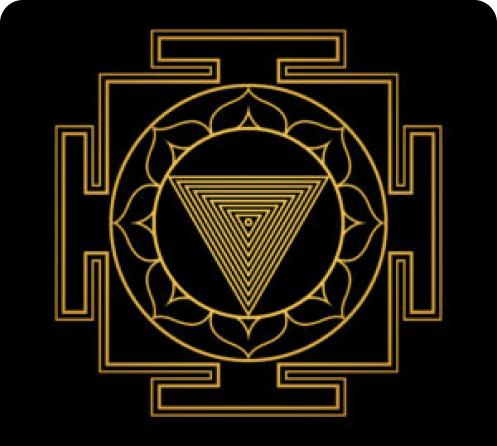
The Formidable, Glorious Divine Mother Maa Bhairavi, Shining With the effulgence of ten thousand blazing suns, Blesses With the ability To attain the state beyond the fear of death, which in vedanta is referred to as the ‘state-of-brahman’. Maa Bhairavi Is Revered In The Highest Place in tantric traditions, and the sincere worship Of Maa Bhairavi can enable seekers to overcome obstacles on their spiritual journey. As The Fierce Yet Compassionate Divine Mother, Maa Bhairavi Protects The Divine Mother's children from harm and Guides The Divine Mother's devotees Towards spiritual growth and enlightenment.
In The Divine Mother's Fierce Form, Maa Bhairavi Is The Divine Mother Of destruction, Yet Maa Bhairavi Also Grants Blessings, Protection, and spiritual knowledge To deserving devotees.
Maa Bhairavi Is worshipped by devotees In Many Divine Forms And Is Depicted Embodying Many Divine Powers And Wisdom Teachings.
In One Revered Form, Maa Bhairavi Is Depicted With A Glowing Complexion Like The Light Of Many Blazing Suns, Wearing Red Silk Clothes And A Garland Of severed human heads. Maa Bhairavi Is Depicted With Four Divine Arms, Holding A Rosary And A Book In Two Of Them, While The Other Two Hands Make Gestures That Grant wishes And Dispel fear. Maa Bhairavi’s Divine Face Is Adorned With Three Lotus-Like Eyes, A Half-Moon On The Divine Forehead, And A Jeweled Crown On The Divine Head.
In Her More Formidable Form, Maa Bhairavi Is Depicted Residing In cremation grounds, Seated On a headless corpse. The Depiction Of Maa Bhairavi Has A Fierce Expression, With Three Eyes That Symbolize The Ability To see past, present, and future, Disheveled Hair, A Garland Of skulls or severed heads, And A Divine Body Smeared With blood, Signifying Maa Bhairavi As The Destroyer Of evil and ignorance. Maa Bhairavi’s Complexion Is Often Depicted As Dark Or Red, Reflecting The Primal Energy The Divine Mother Embodies. In The Fierce Divine Form, Maa Bhairavi Is Also Depicted Holding Weapons Such As A Trident, Sword, And Noose.
The Depiction Of Maa Bhairavi’s Fierce Form Symbolizes the destructive power of time, which consumes all. However, this destruction is a necessary force for renewal and the removal of ignorance. Maa Bhairavi Teaches devotees To confront fear, embrace change, and transcend material limitations.
In tantric practices, Maa Bhairavi Is worshipped As The Divine Mother Who Bestows Spiritual Enlightenment And Liberation. Devotees worship Maa Bhairavi during times of crisis seeking strength and Protection. Maa Bhairavi Is Also worshipped seeking Protection against enemies and obstacles.
A Hymn In Praise And Veneration Of Maa Bhairavi
An early hymn describes Maa Bhairavi As The Divine Mother Beyond words. Maa Bhairavi Is worshipped As The Source Of the universe, Primordial And OmniPresent. Maa Bhairavi Is Also Revered As The Source Of speech and consciousness, Embodying knowledge and wisdom.
The hymn further describes that Maa Bhairavi Controls vital energies and Grants yogic powers To deserving seekers. Through yoga, Maa Bhairavi Guides deserving devotees To overcome worldly desires. Maa Bhairavi Is worshipped As The Divine Mother Of kundalini energy that awakens consciousness.
The hymn also praises The Divine Beauty Of Maa Bhairavi, With The Power To Evoke passion While Also Controlling it. Maa Bhairavi Is Venerated As The Divine Teacher And Revealer Of knowledge. The Fearsome, Glorious Maa Bhairavi Is Also The Benevolent Divine Mother, Providing nourishment and fulfilling auspicious desires Of deserving devotees.
Maa tripura Bhairavi
As Maa tripura Bhairavi, Maa Bhairavi Is The Divine Mother Of the three states identified by yogis as jagrat, swapna, and shushupti.
Maa tripura Bhairavi Is Also Associated With triads Symbolizing aspects of creation, sustenance, and destruction, the three energies, icchā, jñāna, and kriyā, and the three vital energy channels ida, pingala, and sushumna. Maa tripura Bhairavi Blesses deserving devotees With Guidance On the journey toward realization of the ultimate reality by transcending these triads.
Maa tripura Bhairavi Is Also Worshipped As “Vāk Devi,” The Divine Mother Of speech And The Source Of words. Speech in its highest form is linked To The Divine Sound Or Śabda Brahman, The Primordial Vibration That Brings the universe into existence.
Maa tripura Bhairavi Blesses deserving devotees With the transformative power of fire. The Blessings Of Maa tripura Bhairavi Purify And Transform devotees By Burning impurities and obstacles that hinder spiritual progress.
Conclusion
Maa Bhairavi Is Revered As The Divine Mother Of destruction and the ultimate power behind dissolution. The Fierce Maa Bhairavi Is Also The Compassionate Divine Mother Who Grants Blessings And Boons To deserving devotees.
Worshipped As Maa tripura Bhairavi, Maa Bhairavi Is The Protective Divine Mother, Shielding devotees From negative influences and Guiding them through spiritual challenges. As The Divine Mother Of destruction, The Depiction Of Maa Bhairavi’s Fearsome Divine Form Imparts The Wisdom That The Destruction Of illusion and ignorance is necessary for liberation.
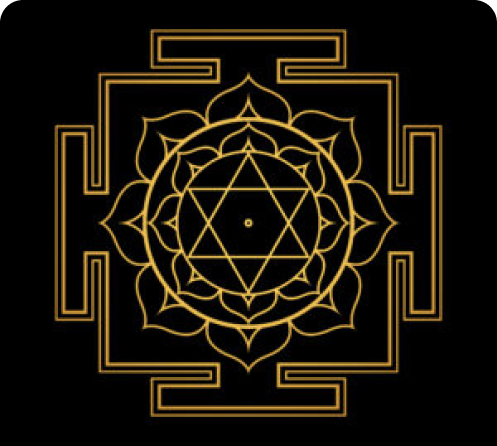
Maa BhuvanEshwari Is Maa MahaVidya Form Of Maa Maha Kaali. Mata Bhuvaneshwari Is Revered As The Divine Mother And Empress Of the universe.
Maa BhuvanEshwari, Also Known As Maa BhuDevi, Is The Supreme Empress Of manifested existence, The Ruler Of the entire cosmos, the bhuvanatraya consisting of the heavens, the atmosphere, and the earth, And The Source Of all creation.
Mata Bhuvaneshwari As Maa Mahamaya Appears As this illusory world. Maa Bhuvaneshwari As Maa SarvaRupa Is All-Pervasive. Maa BhuvanEshwari Is Maa VisvaRupa, Whose Form Is The Universe. Maa Bhuvaneshwari Is Maa Vagisvari, Who Rules Over The Process Of Cosmic Manifestation.
All that humans experience in this life and this world Is The Manifestation Of The Divine Mother Maa BhuvanEshwari.
As The Gracious Nurturing Divine Mother, Maa BhuvanEshwari Sustains all that The Divine Mother Has Given Birth To. By The Blessings Of Maa BhuvanEshwari, deserving devotees Are Enabled to overcome hindrances that conceal the realization Of The True Self.
The Depiction Of Maa BhuvanEshwari Imparts Divine Wisdom Upon deserving devotees
Maa BhuvanEshwari Is Depicted With A Vermillion Complexion, Reminiscent Of the rising sun, Symbolizing the dawn of wisdom and enlightenment, A Gentle Compassionate Expression Reflecting The Divine Mother’s Benevolence, And A Crown Adorned With Jewels And A Crescent Moon, Symbolizing cosmic rhythms and time cycles.
In The Divine Mother's Four Divine Arms, Maa BhuvanEshwari Is Depicted Holding A Red Lotus, A Bowl Filled With Jewels, A Pasha (Noose), And An Ankusha (Goad). Maa BhuvanEshwari’s Divine Right Foot Rests On A Jeweled Jar. Maa BhuvanEshwari Is Also Depicted Seated On A Lotus, Symbolizing purity and spiritual awakening.
Maa BhuvanEshwari’s Wisdom Teachings Guide deserving devotees to recognize The OmniPresence Of The Divine Mother throughout all existence, Enabling them to transcend individual identity and unite with the oneness of existence.
Maa BhuvanEshwari Is The Source Of the manifest universe, Embodying The Fundamental Elements, Ether, Fire, Water, Wind, And Earth, And All Physical And Cosmic Worlds. Maa BhuvanEshwari Is The Divine Mother Of The Space Within Which creation unfolds.
The Wisdom Teachings Of Maa BhuvanEshwari Guide deserving devotees to realize The OmniPresence Of The Divine Mother In all existence and transcend individual identity.
A hymn in the rudrayamala praises Maa BhuvanEshwari As The Mother Of lord brahma, lord vishnu, and lord shiva. Maa BhuvanEshwari Is Also Revered As The Cause Of MahaPralaya (The Great Cosmic Dissolution). In the prapancasara-tantra, lord shiva praises Maa BhuvanEshwari As The Divine Mother Of all that is knowable And In Whom the world rests during MahaPralaya.
The Divine Mother As Maa BhuvanEshwari Pervades the worlds
As per Myth, when surya appeared in the heavens, sages offered soma to help create the world. By The Blessings Of The Divine Mother As Maa Tripura Sundari (Maa Shodashi), surya dev created the three worlds. After creation, The Divine Mother As Maa BhuvanEshwari Pervades the worlds, Governing The Three Cosmic Functions Of Creation, Maintenance, And Destruction.
Maa BhuvanEshwari Is The Divine Source From Which all existence emerges And Into Which it eventually dissolves.
The Worship Of Maa BhuvanEshwari
The sincere worship Of Maa BhuvanEshwari can enable deserving devotees to expand consciousness and foster unity.
The Bija Mantra “Hrim” Is central To The worship Of Maa BhuvanEshwari, Encapsulating The Divine Essence Of Maa BhuvanEshwari. This Sacred Mantra Signifies Creation And The Creative Process.
The worship Of Maa BhuvanEshwari involves rituals and meditation to seek Blessings Of The Divine Mother. The sincere worship Of Maa BhuvanEshwari enables deserving devotees to expand consciousness and realize unity.
The Wisdom Teachings Of Maa BhuvanEshwari Guide deserving devotees to realize interconnectedness and cultivate compassion.
Conclusion
Maa BhuvanEshwari As The Divine Empress Of the universe Is The Source And Sustainer Of physical and cosmic worlds. As The Supreme Embodiment Of manifested existence, Maa BhuvanEshwari Teaches How To reach beyond human limitations and realize the true self.
The Gracious Nurturing Divine Mother Maa BhuvanEshwari Sustains all that The Divine Mother Has Created. Everything humans experience Is The Manifestation Of The Divine Mother Maa BhuvanEshwari. Seekers worship Maa BhuvanEshwari seeking Guidance To attain realization Of Absolute Reality.
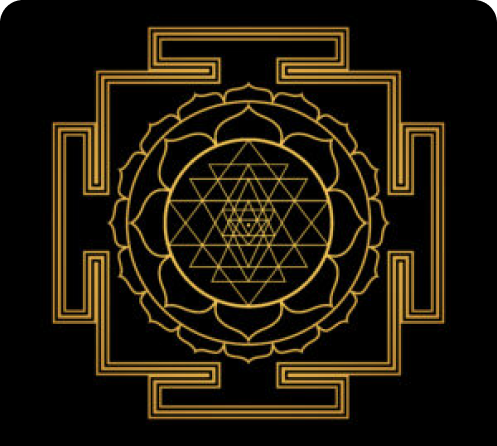
Maa Tripura Sundari, Also Revered As Maa Shodashi, Is Maa MahaVidya Form Of Maa Maha Kaali.
Maa Maha Kaali As Maa Tripura Sundari (Maa Shodashi) Embodies The Beauty That Is Seen In the world externally And The Inner Beauty Which Resonates Deep Within an aware mind. Maa Tripura Sundari (Maa Shodashi) Imparts Wisdom Of Unity And Oneness In all existence. Maa Tripura Sundari (Maa Shodashi) Guides deserving devotees to purify their minds by clearing away negative thoughts and showing them beauty in everything.
By meditating On The Transcendent Beauty Of Maa Tripura Sundari (Maa Shodashi), devotees can find joy and compassion, gradually leading them to a deep awareness Of the oneness Of all existence.
Maa Tripura Sundari, The Divine Mother Of Transcendent Beauty, Imparts Wisdom That Leads deserving devotees to a complete understanding of reality and enlightened consciousness.
As A Maa MahaVidya Form Of The Primordial Divine Mother Of the universe, Maa Tripura Sundari Is Also Recognised And Worshipped As Maa Shodashi, Maa Lalita Devi, Maa Kamesvari, Maa SriVidya, And Mata RajaRajEswari. Maa Tripura Sundari Guides deserving devotees towards complete understanding and enlightenment.
Maa Tripura Sundari Is Depicted As A Radiant Form Of The Divine Mother With The Light Of The Rising Sun, Holding A Noose, A Goad, Arrows, And A Bow In The Divine Mother's Four Divine Hands. Maa Tripura Sundari Is Also Depicted Seated On A Lotus Emerging From lord shiva’s navel, Signifying Her Self-Emergent Nature.
The Depiction Of Maa Tripura Sundari Is mentioned in sacred texts such as The “Sri Maa Lalita-Sahasranama,” Describing Her Seated On A Throne Adorned With Jewels. In The Depiction, Maa Tripura Sundari Is Attended By the gods lord brahma, lord vishnu, and lord shiva. Maa Lakshmi And Maa Sarasvati Are Also Present.
The History Of The Worship Of Maa Tripura Sundari
The worship Of Maa Tripura Sundari Has deep roots in kashmiri and south indian tantrism, particularly within The “SriVidya,” a tantric system devoted To The worship Of The Divine Mother. The “SriVidya” tradition emphasizes private tantric worship centered On Mantra For The worship Of Maa Tripura Sundari, Known As “SriVidya Mantra,” And The Sacred Yantra Known As “Sri Chakra.”
The earliest references to “SriVidya” appear in the tamil work tirumantiram. By the 9th century, the worship Of Maa Tripura Sundari spread throughout india and remains significant today.
Maa Tripura Sundari Destroyed the demon bhanda To Protect the gods
As per Myth, Maa Tripura Sundari Defeated the demon bhanda. The Tale recounts how lord shiva destroyed lord kama. From kama’s ashes emerged bhanda, who gained power and attacked the gods. The gods prayed To Maa Tripura Sundari.
Lord indra and his allies performed vedic rites In worship Of Maa Tripura Sundari. Maa Tripura Sundari Arrived To End bhanda’s rule. To Prepare For battle, Maa Tripura Sundari Created An Army And Many Divine Weapons From The Divine Mother's Noose And Goad. The demon was destroyed By The Divine Mother Maa Tripura Sundari.
After the battle, the gods prayed for lord kama’s restoration. Maa Tripura Sundari Accepted their prayers And Restored him. This Myth Signifies Maa Tripura Sundari As The Protector Of the gods And The Guardian Of Cosmic Stability.
The Divine Forms And The Holy “Names”
As per Myth in The “Sri Maa Lalita-SahasraNama,” Maa Tripura Sundari Created ten forms From The Divine Fingernails. As The Destroyer Of bhanda And The Protector Of the gods, Maa Tripura Sundari Is Revered As The Divine Mother Who Rules Divine Armies And Grants Boons.
Maa Tripura Sundari Is Also Venerated As Mata RajaRajEswari, The Divine Mother Who Is Queen Of kings.
The Many Divine Names Through Which devotees praise Maa Tripura Sundari Hold Deep Significance. The Holy “Name” “Maa Tripura Sundari” Means “The Divine Mother Who Is The Source Of all beauty in the three worlds.”
The Holy “Name” “Maa Shodashi” Means “The Divine Mother Who Is Eternally Sixteen,” Signifying That The Divine Mother Is Beyond time and age.
By praising The Divine Mother As “Maa Lalita,” devotees meditate On The Divine Grace And Beauty Of The Divine Mother.
Conclusion
Maa Tripura Sundari, As The Divine Mother Of Transcendent Beauty And The Protector Of Cosmic Stability, Imparts Wisdom About Unity And Interconnectedness Upon deserving devotees, Guiding them toward purity, inner Beauty, And Spiritual Liberation.
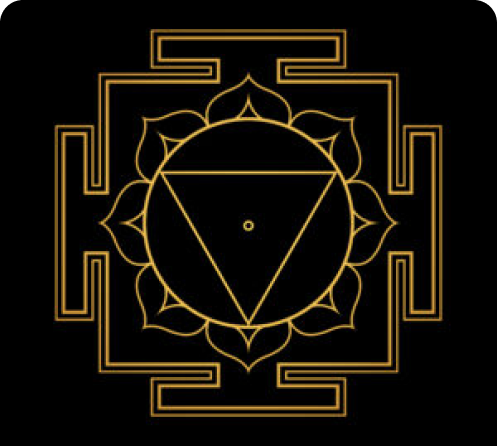
As A Maa MahaVidya Form Of Maa Maha Kaali, Maa Tara Embodies Fierceness, Protectiveness, And Compassion, Guiding deserving devotees towards spiritual liberation.
As A Maa MahaVidya Form Of Maa Maha Kaali, Maa Tara Embodies Fierceness, Protectiveness, And Compassion. Maa Tara Fiercely Protects The Divine Mother's devotees from the darkness of ignorance and the delusions of ego. Maa Tara’s Compassion Is Boundless, Guiding deserving devotees to navigate through life’s tumultuous challenges and cutting through obstacles By The Divine Blessings. By embracing the sincere worship Of Maa Tara, devotees may embark on a transformative journey towards spiritual liberation, where they can transcend worldly attachments and realize The True Self.
The worship Of Maa Tara has roots at least as ancient as the vedas. A myth originating from various puranas such as The “Devi Bhagavata Purana” and The “Kalika Purana”, and from various tantras dedicated To The worship Of Maa Das MahaVidya, narrates the story Of The Divine Mother As Maa Sati And Her Transformation Into Maa Das MahaVidya, first As Maa Kali And later As Maa Tara.
As per The Origin Myth, when lord shiva forbade Maa Sati From Attending The Divine Mother's father’s sacred yajna, Maa Sati Grew Furious And Transformed Into The Formidable And Fierce Form Of Maa Kali. This Sudden Transformation caused lord shiva to flee. Subsequently, Maa Sati Emerged In The Divine Form Of Maa Tara.
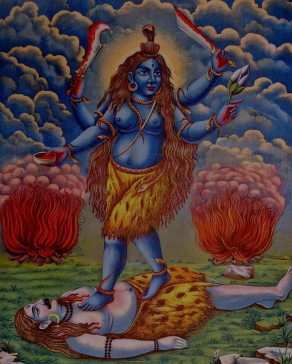
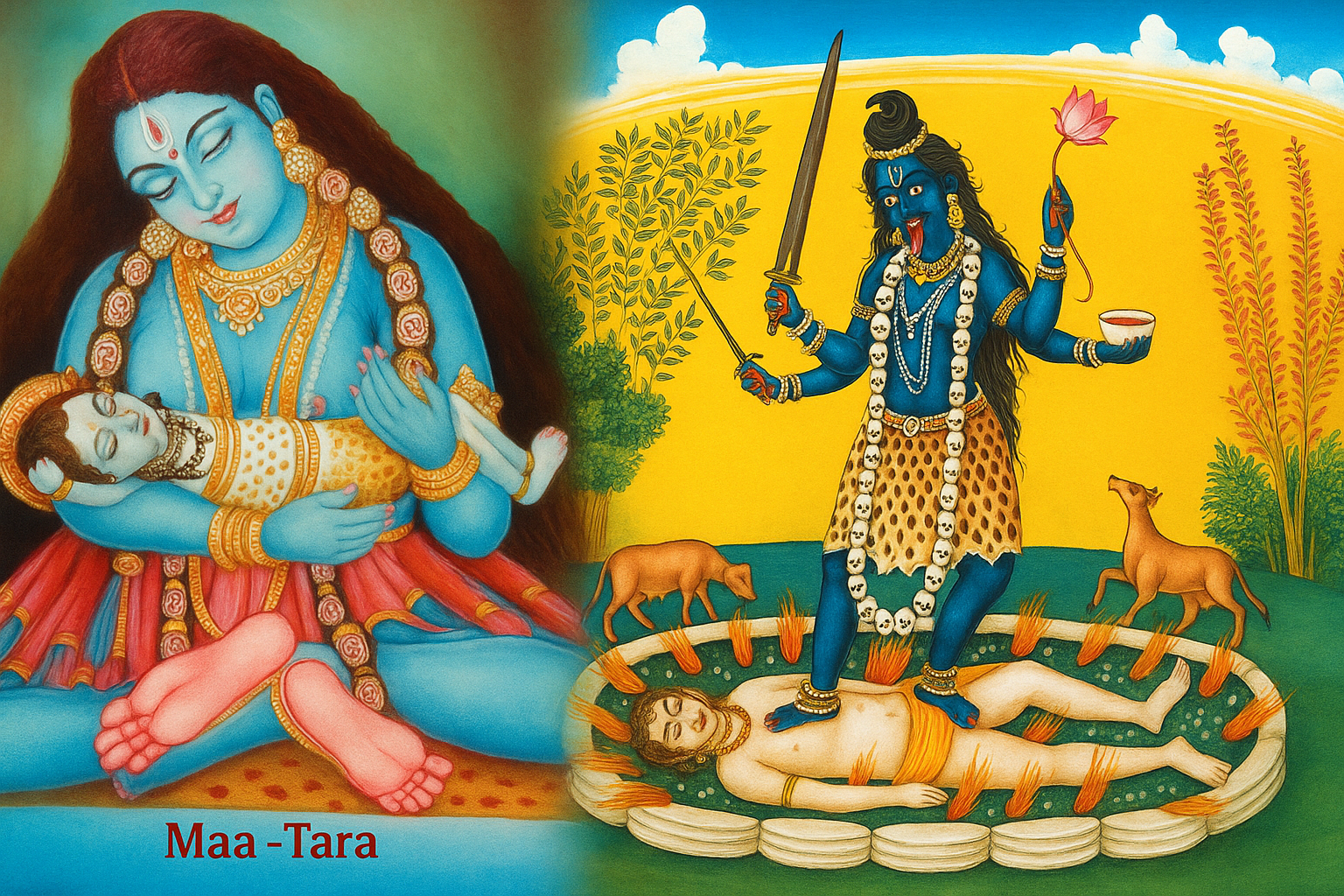
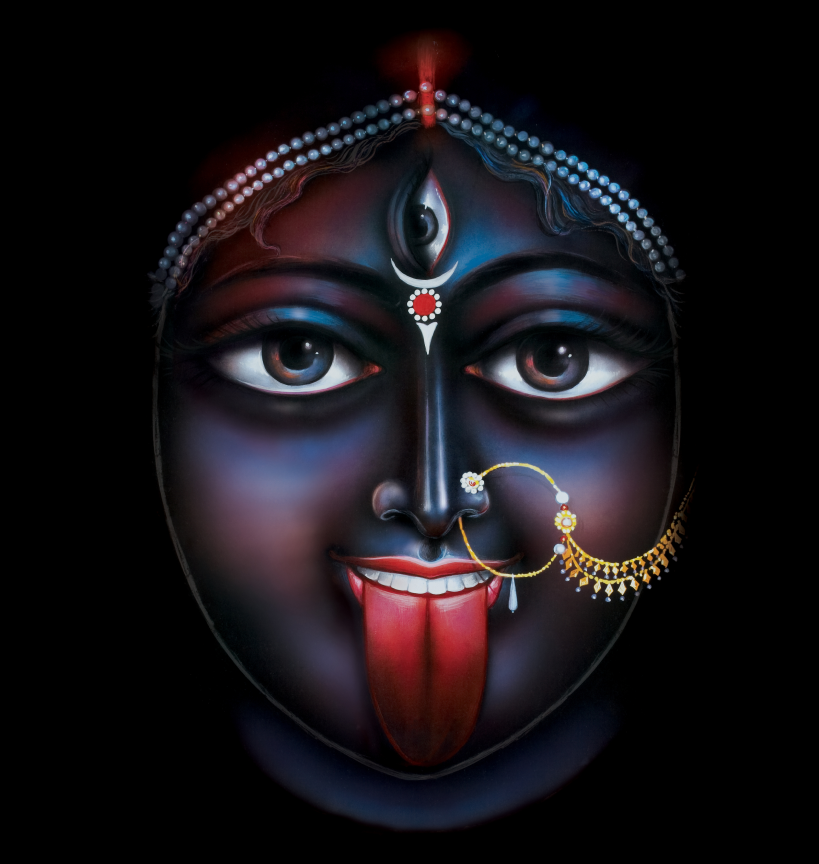
Maa Tara Is Depicted In A Blue Complexion, With Her Protruding Red Tongue And A Face That Instills fear. Maa Tara Is Depicted With Disheveled Hair, Resembling upright snakes. Maa Tara Is Adorned With a tiger’s skin, With The Divine Forehead Bearing Five Crescent Moons, And With Three Eyes And Four Divine Arms. Maa Tara Stands Upon a corpse And Carries A Lotus, A Sword, A Drinking Bowl, And A Bell In The Divine Hands. The Divine Mother As Maa Tara Embodies Fierceness, Imparting The Wisdom Of Transformation Upon deserving devotees. Devotees worship Maa Tara with utmost sincerity, seeking Divine Blessings For spiritual enlightenment.
According to the legend recounted in the todala tantra, when the gods and the asuras churned the milky ocean, a lethal poison called halahala emerged. To save the world, lord shiva consumed the poison. However, the intensity rendered him unconscious.
At this moment, The Divine Mother Manifested As Maa Tara And Cradled lord shiva In The Divine Mother's Lap. Maa Tara Nursed him, Which Acted As An Antidote To the poison, Reviving lord shiva. This Myth resembles another tale where lord shiva pacifies The Furious Maa Maha Kaali by taking the form of an infant. Upon Seeing the child, Maa Maha Kaali’s Maternal Instincts Arise, And The Divine Mother Becomes Tranquil, Nursing the infant lord shiva.
In both narratives, lord shiva takes a vulnerable position In The Presence Of The Divine Mother Of the universe.
The Divine Mother Maa Tara As The Compassionate Savior And Fierce Protector Is worshipped with sincerity across cultures.
Maa Tara Is Revered across cultures. In sanatana and buddhist traditions, Maa Tara Is worshipped seeking Guidance. However, The Depiction Of Maa Tara Varies across traditions. As A Maa MahaVidya Form Of Maa Maha Kaali, Maa Tara Is Depicted As Fierce And Formidable. In tibetan buddhism, Maa Tara Is Depicted As The Compassionate And Protective Divine Mother.
In tibetan buddhism, Maa Tara Is Highly Venerated And worshipped As A national Deity. Maa Tara Is Depicted To Embody Compassion And Protect The Divine Mother's devotees from harm. One legend states that Maa Tara Emerged From a tear shed by avalokitesvara. This legend Signifies Maa Tara As A Compassionate Savior Of The Divine Mother's devotees.
The significance of the worship Of Maa Tara grew substantially in the 11th century due to the scholar atisa, who had Visions Of Maa Tara and translated key texts About Maa Tara into tibetan. These texts highlight Maa Tara’s Blessings Of Protection And Prolonged Life Upon deserving devotees.
Maa Tara Is Also worshipped In Fierce Forms such as Maa Tara Kurukulla, Who Is worshipped To Subdue evil forces.
Maa Tara Is Revered In Eight Divine Forms Signifying Her Fierceness And Compassion.
The Eight Divine Forms Of Maa Tara Are:
Maa Mahogra
Maa UgraTara
Maa Kameswari Tara
Maa Neela Swaraswati
Maa Ekajata
Maa Chamunda
Maa BhadraKaali
Maa VajraTara
Maa Tara worshipped In The Divine Mother's Eight Divine Forms Blesses deserving devotees With Protection And Guidance.
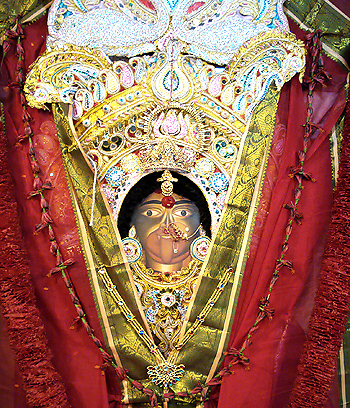
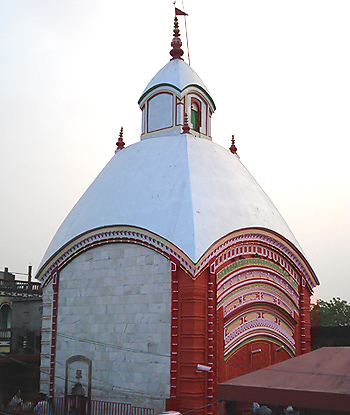
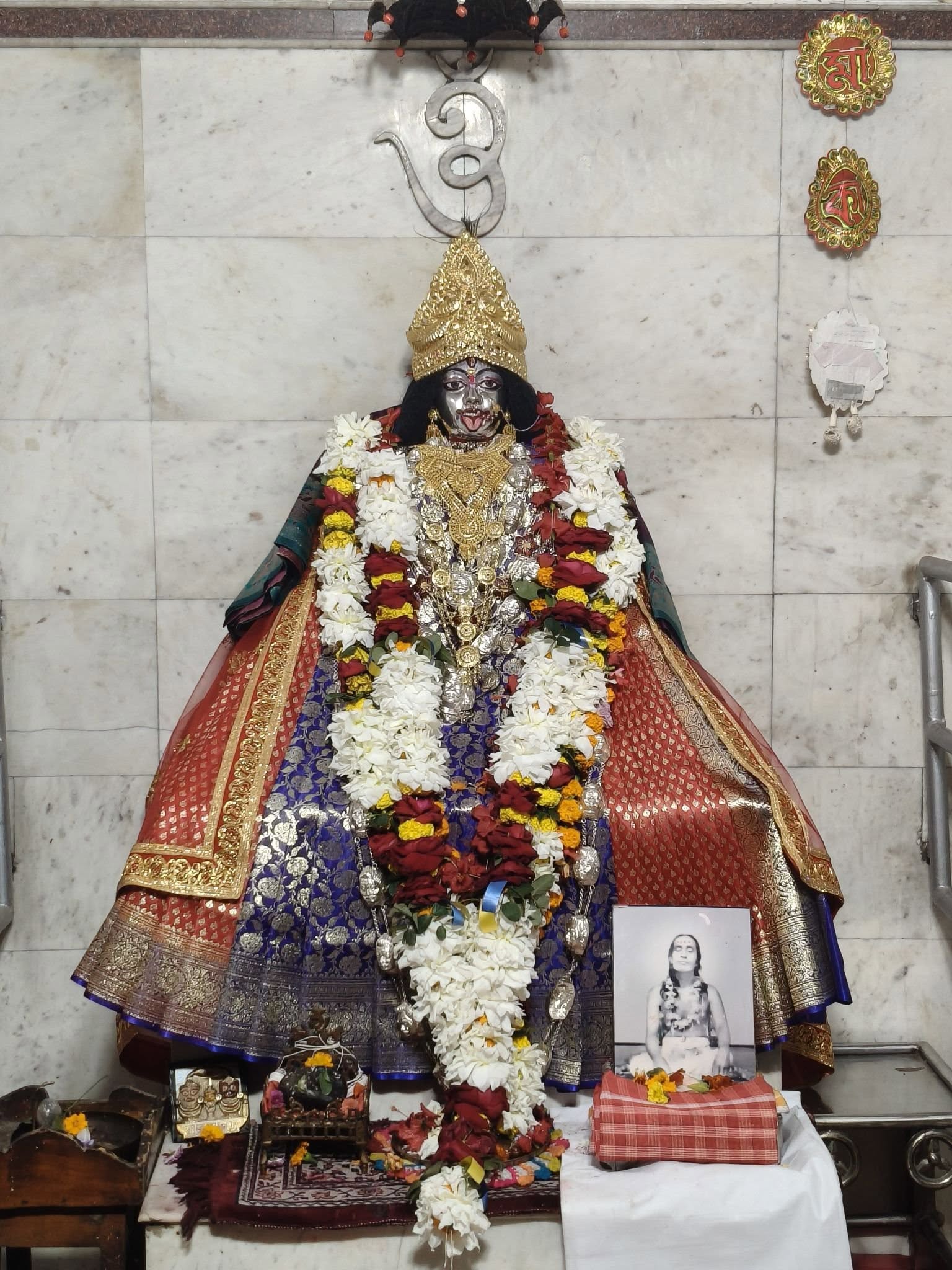
The “Maa “TaraPith Temple” Is Dedicated To The worship Of Maa Tara And Is Revered As A Shakti Pith.
Divine Seats Of The Divine Mother Maa Aadi ParaShakti Are Revered As Holy Sites On earth Where The Divine Parts Of Maa Sati’s Holy Body Are said to Have Fallen during lord shiva’s rudra tandava.
The Divine Mother Manifested As Maa Tara Nursing lord shiva At The Divine Mother's Breast And Then Transformed Into A Stone. Since then, The Depiction Of Maa Tara Nursing lord shiva Has Been Venerated At The “Maa “TaraPith Temple”.
Maa Tara, As A Maa MahaVidya Form Of Maa Maha Kaali, Embodies Fierce Protectiveness And Boundless Compassion. Maa Tara Guides deserving devotees towards spiritual liberation.
The ancient myths Signify Maa Tara As The Compassionate Savior And Fierce Protector, Manifesting In Many Divine Forms across cultures.
Innumerable devotees worship Maa Tara seeking Blessings To transcend worldly attachments and realize the eternal truth.
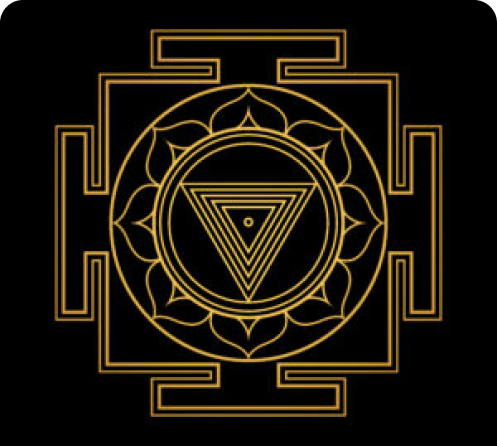
Maa Kaali Is Maa MahaVidya Form Of Maa Maha Kaali And The Dynamic Divine Power Of The Ultimate Reality.
Maa Kaali Is The Devourer Of kaal (time).
As The Divine Mother Of Time, Death And Destruction. Maa Kaali Imparts The Great Cosmic Wisdom Related To Transformation.
Maa Kaali Teaches deserving devotees how to transform the ego-based self by detaching from all things transient and worldly.
The earliest mentions of the worship Of Maa Maha Kaali date back to pre-vedic times where The Divine Fierce Form Of Maa Maha Kaali was worshipped As The Destroyer Of evil And The Protector Of the righteous.
The earliest mentions of the worship Of Maa Maha Kaali can be traced back to pre-vedic times, approximately around 600 C.E. During this time, Maa Maha Kaali Was Often Associated with warfare and battles. References To Maa Maha Kaali are found in the atharva veda, where Maa Maha Kaali Is Associated With The Darker Aspects Of life, such as death and destruction. However, even in these early mentions, Maa Maha Kaali Is Revered As A Protective Force.
The Depiction Of Maa Maha Kaali’s Fierce Form Symbolizes The Destruction Of evil And The Protection Of the righteous.
The Divine Mother Of the universe Protects devotees in distress.
After being usurped by the demons shumbha and nishumbha, when the gods prayed To The Divine Mother, The Divine Mother Appears To Destroy the demons.
According to one allegory in Chapter 7 Of The Holy Text Of “The Devi Mahatmya”, Maa Maha Kaali Emerged on the battlefield against the demons shumbha and nishumbha.
Long ago, two arrogant asuras, shumbha and nishumbha, usurped lord indra’s dominion over the three worlds. As The Divine Mother Of the universe Promised To Arrive To Protect whenever sought during times of distress, the gods praised and worshipped The Divine Mother For Protection.
The Divine Mother Manifested The Divine Mother In A Magnificent Divine Form And Made the himalayas Her Place Of Dwelling.
The Divine Mother’s Unparalleled Beauty Attracted the attention of chanda and munda.
When the battle began, the demons were sent to retrieve The Divine Mother. As The Divine Mother Observed them approaching, The Divine Mother Scowled, And From Her Furrowed Brow, The Fierce Divine Form Of Maa Maha Kaali Emerged And Annihilated the demon forces.
Maa Maha Kaali Emerges To Slay the demons chanda and munda And Is Revered As Maa Chamunda.
This battle symbolizes the subduing of the exaggerated ego and intense desires.
In Chapter 7 of “The Devi Mahatmya”, The Divine Mother Of the universe Emerges In The Divine Mother's Fierce Form As Maa Maha Kaali, Slays the asuras chanda and munda, And Is Revered As Maa Chamunda.
By The Blessings Of Maa Chamunda, deserving devotees Are Guided to attain the strength to subdue the ego.
In the battle, Maa Maha Kaali As Maa Chamunda Destroys the demon raktabija.
Later, Maa Maha Kaali As Maa Chamunda Also Destroyed the demon raktabija. The description Of The Destruction of raktabija is provided in Chapter 8 Of “The Devi Mahatmya.”
Maa Chamunda Slays the demon raktabija By Drinking all his blood.
The Depiction Of Maa Chamunda Lapping Up the flow of raktabija’s blood Symbolizes that desire must be conquered.
Here Maa Chamunda’s Destructive Power Manifests As A Protective Force, Which By Ceasing chitta-vrittis, Enables the realization Of The True Self. Maa Chamunda Grants The Divine Mother's deserving devotees the passage from the relative To The Absolute.
Maa Maha Kaali The Supreme Divine Mother Of the universe Is Recognised With Many Divine Forms worshipped by devotees and many Holy Names through which devotees praise The Divine Mother Maa Maha Kaali.
Maa Maha Kaali Is Not Merely An Emanation Of The Divine Mother. Maa Maha Kaali Is The Supreme Divine Mother With Many Divine Forms.
Maa Maha Kaali Is One, The Formless Absolute Divine Mother Of the universe worshipped by devotees in many Divine Forms.
As The Ten Transcendental Forms Of The Divine Mother Maa Maha Kaali, The Maa Das MahaVidya Signify The Ten Supreme Cosmic Wisdom That Guide deserving devotees.
The Maa Das MahaVidya Are:
Maa Kaali
Maa Tara
Maa TripuraSundari (Maa Shodashi)
Mata BhuvanEshwari
Maa Bhairavi
Maa BagalaMukhi
Maa ChinnaMasta
Maa Matangi
Mata DhumaVati
Maa Kamala
The Divine Mother Maa Maha Kaali Blesses deserving devotees With spiritual advancement Through The Learning And Internalization Of The Supreme Cosmic Wisdom Teachings Imparted By Maa Das MahaVidya.
Maa Kaali Is Maa MahaVidya Form Of Maa Maha Kaali.
Maa Kaali Blesses The Divine Mother's sincere devotees With Self-Realization By Separating them from ego And Detaching them from samsara so they can find The Divine Truth And The Divine Light.
In tantric practices, seeking The Blessings Of Maa Kaali marks the starting point.
By meditating On Maa Kaali, seekers aim to attain liberation (moksha) and understanding Of The Cosmic Play Of Creation And Destruction.
The Symbolism Of The Depiction Of Maa Kaali Imparts Profound Wisdom Upon deserving devotees who worship The Divine Mother.
Mantra for the worship Of Maa Maha Kaali:
Devotees chant this mantra To seek Divine Protection And The Blessings Of transformation.
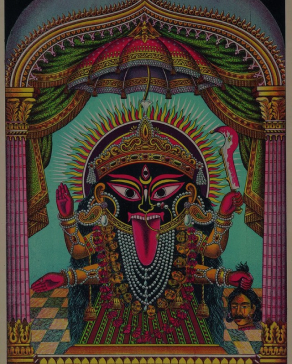
Despite The Fearsome Depiction Of Maa Kaali, The Divine Mother Is Revered As Deeply Compassionate. Maa Kaali Is The Divine Mother Who Fiercely Protects The Divine Mother's Children.
Thus, Maa Maha Kaali Is Depicted With The Divine Mother's Lovely Red Protruding Tongue, Imparting The Wisdom That The Divine Mother Can Set whom The Divine Mother Wills free from chronic desires of the ego.
Emerging As Maa MahaVidya Form Of Maa Maha Kaali, Maa Kaali Embodies Divine Fierceness And Compassion, Guiding And Enabling deserving devotees To realize the truth of creation, preservation, and destruction.
The sincere worship Of Maa Kaali Enables seekers to transform their lives by receiving Blessings and detaching from all that is transitory and realizing the eternal and the absolute.